I am absolutely delighted to be interviewing Miranda Sibo Paul today. I first “met” Miranda after winning a random prize during the PiBoldMo Challenge headed by Tara Lazar. A beautiful multicultural book called “Tales from China” a story adaptation of World Favorite Fables by Steve Jackson and Miranda. I am so interested in multicultural themes I thought I would take this opportunity to garner from Miranda some interesting facts about what she does, and I thought you might like to join me.
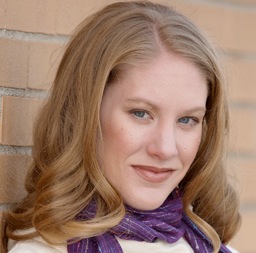
Miranda Paul is a children’s writer and editor who loves a good cultural tale. Miranda is the author of more than 40 digital books for young children, including the I Like Books Series published by Grasshopper Apps and several titles for iStorybooks, the #1 Amazon-ranked free Android app for kids. Miranda is also the founder and moderator of Rate Your Story, a free critique rating site for writers. When she’s not working, she’s busy enjoying her roles as a mother and an international volunteer.
Me: I see you did an interview with Silvia Ramsey back in October last year in which you mentioned writing about folk tales takes a lot of time, patience and research, can you tell me how and where do you go to research or obtain your material from?
Miranda: Thanks for having me, Diane.
I’ve always loved folk tales, but when I was first contracted to retell a few folk tales I went back to the original, public domain versions of the stories I was to rewrite – and realized I had my work cut out for me. Have you read Andrew Lang’s version of The Three Little Pigs? Or some of the original Grimm’s tales? I discovered how much of each tale has been cut out and changed, and my challenge was to make sure that elements from copyrighted retellings since (i.e. Disney) weren’t influencing or finding their way into my original versions. Obviously, I also had the challenge of turning them into stories appropriate for children and within the guidelines of the publisher’s style and specified word count as these were work-for-hire publications.
With Tales from China: World Favorite Fables, the publisher approached me to do English Story Adaptation and Editing. An entire team of researchers and translators actually did a lot of the research, and I got to do a lot of the fun parts crafting the stories (not that research isn’t fun, but I don’t speak much Mandarin!).
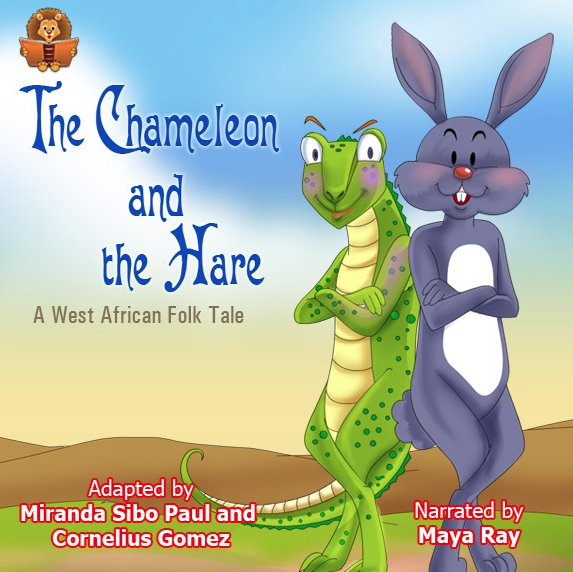
With regard to my Gambian folk tales, my research is about as up close and personal as it gets–I used to teach in West Africa and have traveled back many times. There, I’ve worked with Gambian author Cornelius Gomez who works very diligently transcribing oral folk tales into English. I’ve also got very rare copies of three other Gambian folk tale collections–the only three that I have actually ever heard of. And, some of the stories exist only in speech still (but I’m working to get them on paper). They are very challenging to adapt because it’s a struggle to keep the culture authentic but still tailor the story to be something marketable that can reach audiences anywhere.
Me: I notice you have a number of stories adapted as digital books through Grasshopper apps.com .. a global focus, are you looking to focus on other countries besides China and South Africa?
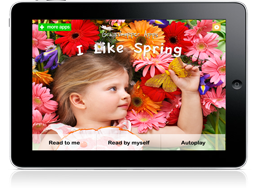
Miranda: When GrasshopperApps hired me to write the I Like  Books Series, it wasn’t necessarily a multicultural project, but I knew that the board books would have to appeal to kids around the world – that was clear in my editorial instructions. I didn’t have anything to do with the photographs, but I think that the photographers did a great job reflecting a global focus by including diverse children and families to accompany the poetic text.
The reviews and feedback on these apps are really encouraging, too. It’s always great to hear good things about your books, but a few comments from special education teachers about how valuable these books have been as they teach autistic students really touched me.
Me: How important is it when writing folk tales or stories from other cultures that place names and characters are originate from history?
Miranda: I think it depends entirely on what you’re trying to accomplish with the folk tales. For my Gambian folk tales, which are the first children’s adaptations of the tales for an American audience, it was extremely important to keep the names and places authentic in order for the books to also be a window into another culture.
Even animal sounds can be a fun way to show kids cultural 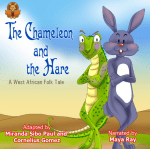 differences in language. In Chameleon and the Hare, for example, his bones don’t say “cre-e-e-e-ek,” as they would if it were a truly American story. Instead, we kept the original sound Gambians use when they tell the story: “See-kee-koo! Wee-kee-Koo! Nee-Kee-Koo!” We only adjusted the spelling so kids could easily know how to pronounce the sounds.
Me: Is it important do you think to have such books printed in both english and in the culture/country it originates from?
Miranda: In Tales from China, the book is entirely bilingual. For the Gambian folk tales, we are working on that. There are many Gambians who don’t know the stories of their Grandparents, for example. Getting them published in the vernacular would be great.
Me: How does writing folk tales or stories from other cultures differ from other genre? Are there problems in getting published?
Writing folk tales is different from, say, writing general fiction picture books in that you don’t have free reign to do whatever you’d like. There’s a story there, and only so much you can change – unless you’re writing a fractured fairy tale or a parody. Even then, however, you’re typically working within some guidelines, and if the tale is cultural, you’ve got research to do.
If you pick up a Children’s Market book, you’ll probably see a number of houses that say “No folk tales,” etc. They must get a ton of submissions. I haven’t tried subbing any folk tale retellings to traditional publishers, so I can’t say. I was fortunate enough to get my contracts through digital publishers who hired me to do the work based upon writing samples and my experience.
Me: What are you in the process of writing now? Will it be a stand alone book or one of many such as “Tales from China?” what else are you planning on in the near future?
Miranda: I’ve written several picture books (some fractured fairy/folk tales, but mostly not). Many of them are in the final stages of polishing and two of them just won me the SCBWI 2012 Mentorship in Wisconsin. Besides getting those submission-ready, I’ve also got a contract for several more stories to be released in 2012 and 2012 with iStorybooks.
And if that weren’t enough? I’m also searching for agents and have set a deadline to complete the first draft of my novel by the end of March.
Me: What advice do you have for me as I am also interested in writing stories with a cultural theme?
Miranda: I would start by writing stories within the cultures you’re most familiar. Or, team up with a writer or someone who has lived where you plan to set your story or can speak the language. These are the top tips I have in addition to research, research, research. There’s also an upcoming Highlights Foundation Workshop on “Creating an Authentic Cultural Voice.” Details are posted at the Highlights Foundation site.
Me: Can you explain to me what an “Apps Around the world” is, or should I say, was, I noticed it was held back in early December. The theme sounds very interesting?
Miranda: In my city, there is a group of parents who meet once a month or more and participate in cultural programming for our kids – it’s called Toddlers for Diversity. I hosted the December program, and the kids played with iPhones, iPads, and tablets as I downloaded and recommended some top apps centered around children & culture. It was fun!
Me: I know you have some wonderful writing tips for those of us who are eager to get published can you share a couple with us?
Miranda: I wish I had all the answers to getting published – let me know if you find them, OK?
Perhaps you’ve already learned the biggest one, Diane – being patient. I am a volunteer judge and the founder of Rate Your Story, and what always strikes me is how many manuscripts get sent in that are nowhere near ready for submission (anyone heard of spell check?). I also work as a freelance editor for many clients who plan to self-publish, and they’re always in such a hurry to get their work released. I once had a client who said none of the main characters (animals) could talk because he wanted it to be just like his favorite movie, Lady and the Tramp, where no animals talked. I promptly pulled out both movie and the book version from one of my five chock-full bookshelves and showed him how they talked…which brings me to my second piece of advice. Read books in the genre you’re writing. Lots!
I’ve been writing for a long time, and my submission tracker spreadsheet is still only one page long. For some, it might be a quantity thing, but for me, it’s a quality thing. Writing children’s books and being a mother have been the two biggest lessons in patience I’ve ever had – because honestly, I consider myself naturally impatient.
Me: I love your comment I came across on your blog, “if you’re a writer (and I suspect you are) cut yourself off and go write after 30 minutes, ok” With a young family and busy life style you must keep to a writing schedule…yes?
Miranda: Yes and no. I work on deadlines rather than a set schedule. Since I write for a couple of magazines and have several clients for whom I write and edit, it’s very important for me to keep track of what’s due when. Every day, whatever is due the soonest gets top priority. Last year, I began including my own deadlines on the calendar too, because they were getting pushed aside. I’ve taken a little less freelancing work this year to accommodate the laboring quest to get some picture books traditionally published in print, and I’ve set many deadlines regarding those (including writing 12 new ones as part of Julie Hedlund’s 12 x 12 in ’12 challenge). I’ve also learned to post my calendar in the house where everyone can see (i.e. hubby) so that they all realize mom has a real job 🙂
Me: Now I have been doing some snooping and found you are a mash potato lover like me. I think we should get together for an eating competition…. I just looooove mashed potatoes… plain,with melted cheese, ham, onion, in fact potatoes done anyway I love. You game?….lol.
Miranda: With cheese – you’re on, Diane! – but not for the ham. I actually don’t eat pork, beef, or any other red meat (and where I live, in Wisconsin, people think I’m some sort of alien because the staple food here is bratwurst).
And can we have the contest at your house? I’ve always wanted to travel there.
Me: Sure Miranda, would love to have you here. Thank you so much for taking the time to answer my questions and I am hoping that by interviewing you on my blog my readers will learn some interesting things I have discovered about you and your blog. Love your weekly tips and culture page.
If you wish to learn more about Miranda her links are below:-
http://www.MirandaPaul.com (website)
http://mirandapaulbooks.blogspot.com (blog)
http://RateYourStory.blogspot.com (Rate Your Story)
Twitter @Miranda_Paul
Now for the Review of “Tales from China” world Favourite Fables
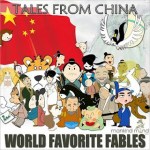
Tales Edited & Adapted By: Steven Jackson, Miranda Sibo Paul
Publisher: Mankind Mind, LLC
Publication Date: June 17, 2011
Category: Folk Tales, Ages 4-12
http://search.barnesandnoble.com/Tales-from-China/Hui-Cui/e/9780615447537
Written in both Madarin and English and beautifully illustrated by William Guo, this is a fun book, which one would return to many times. A cumulation of 15 stories, it has an educational flavour with snippets of cultural lifestyle, foods, festivals and much more. A Message follows each story, a moral which allows discussion, and thought for both young and old. My favorites … Monkey Saves the Moon, Fortune for a Donkey and A Deer of Nine Colors are some of the sweetest stories,…. but then again they all are.
I hope you all enjoyed this post with the lovely Miranda and review, I hope in the near future I may have Miranda back to talk about her other ventures in “Rate your Story” and “Libraries for Gambia”.
Thankyou for stopping by.
 Author: Ruth Thomson












 Writer and Dreamer at work